
In this edition of our “5 Questions with” series, we interview Kristopher Woofter, Founding Editor-in-Chief of Monstrum, a journal dedicated to publishing scholarship on horror and related fields of research.
The interview examines the origins of the journal, its approach to incorporating multimedia content into scholarly publishing, and the opportunities and challenges of interdisciplinary research on horror. It also looks at how recent funding from the Social Sciences and Humanities Research Council of Canada (SSHRC) will support the journal’s work and highlights publications that best represent its mission.
1. Monstrum grew out of a community of scholars and fan-scholars in Montréal and beyond. How did this community lead to the creation of the journal?
Monstrum was founded in 2018 by the Montréal Monstrum Society (MMS), which presents free courses and lectures to the Montréal community. Our goal as a collective was to offer horror studies scholars the opportunity to share their research with other scholars and fans of the genre. The idea of creating a scholarly journal came from a desire to provide both MMS lecturers and scholars across the globe the opportunity to develop their work for publication with editorial support in an open-access format.
A key component of the MMS lectures and Monstrum journal is our commitment to mentoring developing scholars. Many of our lecturers and published authors have been students at various levels of study. We have included the work of graduate students in our main feature essays, and have published students at the undergraduate and college (CÉGEP) levels in our “Student Forum.”
As the journal found its footing in the horror studies community, it also became a part of an FRQSC-funded research collective called CORÉRISC (Collective for Research on Epistemologies and Ontologies of Embodied Risk), which made it possible, after three years of publishing annually, to expand to biannual publication in June and December. Since that time, our scholarly community, collaboration, and reach have grown significantly, though we are still a largely Montréal-based team.
2. Monstrum has incorporated multimedia content into its publications. How does working with formats beyond the traditional academic article affect the editorial and production process?
Our first foray into publishing videographic essays was in our December 2022 special issue (5.2) on “Short-Form Horror,” followed in December 2024 with a special issue (7.2) on “Queer/ing Horror” which was composed entirely of videographic scholarship. We worked closely with the guest editors of these issues to develop ways in which the scholar-artists could explicate their organizing principles, thematic concerns, and aesthetic philosophies while also letting the work speak for itself.
Part of this contextualizing process also involved developing a format for presenting peer reviewers’ comments to support the importance and originality of these innovative audiovisual contributions to horror scholarship. The peer review process involved seeking scholars who could evaluate both the videographic essay’s formal qualities, and the concepts and themes explored in the works. Sometimes this required reviewers who could focus explicitly on either form or content. Our idea was not so much that in videographic scholarship the theoretical or analytical content is somehow more separate from the form than it would be in a written piece, but that sometimes the audiovisual experimentation with form required comment in its own right by experts at the craft.
We are still working to develop best practices for the editorial process and dissemination of multimedia works. We currently follow the model set out by journals such as [in]Transition, which accompanies published videographic scholarship with creators’ statements and critical framing comments by peer reviewers.
Additionally, there are significant technical challenges to publishing audiovisual work, since these formats have to be archived in a stable place—Vimeo in our case—to make sure they remain available online. We will continue to support alternative modes of scholarship in both textual and audiovisual forms regardless of these challenges.
3. What are some of the particular challenges and opportunities of publishing interdisciplinary academic research on horror and related areas?
The greatest opportunity for us has been the ability to work with innovative emerging and established scholars. It is a singular prospect to hear a terrific presentation at a conference and be able to offer that scholar an opportunity to develop their work for peer-reviewed publication.
Additionally, we have had the pleasure of working since 2021 with the Society for Cinema and Media Studies (SCMS) Horror Studies Scholarly Interest Group to assist in jurying their Graduate Student Essay Award, the winning essay receiving an honorarium from, and publication in, Monstrum. This relationship alone has given us the opportunity to support the research of nine emerging scholars in the past five years.
Our most significant challenge has been how to promote the journal to ensure the widest readership. For the first three years, Monstrum had one editor doing all the work of reviewing submissions, orchestrating peer review, providing in-house editorial review, formatting and uploading essays, and managing the website. This left little energy for promotion, which has been limited to social media. We now have a team of five volunteer editors, which alleviates a great deal of the editorial weight, opening up some space to look at promotional outlets.
Our next major endeavour will be to move to a new web hosting platform to facilitate the editorial and production process, as well as adding new student editorial team members for increased editorial and promotional support.
4. Monstrum recently received support from the Social Sciences and Humanities Research Council (SSHRC). What will this funding make possible for the journal that would otherwise have been difficult to undertake?
The generous support from SSHRC’s Aid to Scholarly Journals grant will have an enormous impact on Monstrum’s reach, its support for original research, and its mentorship goals. Not only this, it makes it possible for us to offer paid student and independent researcher roles.
We have added a graduate student Assistant Editor, as well as a new postgraduate student Managing Editor. And we have created new roles that will make the journal an innovator in horror studies research, including a Scholarly Translation Assistantship and a Research Development Assistantship, both roles designed to provide graduate students an opportunity to take on a project that will result in developing their skills and contributing to original research in the form of a feature essay or dossier to be published in Monstrum.
The funding will also make it possible for us to continue our work with undergraduate and college-level researchers, and to improve our support for multimedia scholarship.
5. Are there any articles or issues that you feel particularly illustrate what Monstrum has sought to accomplish as a journal?
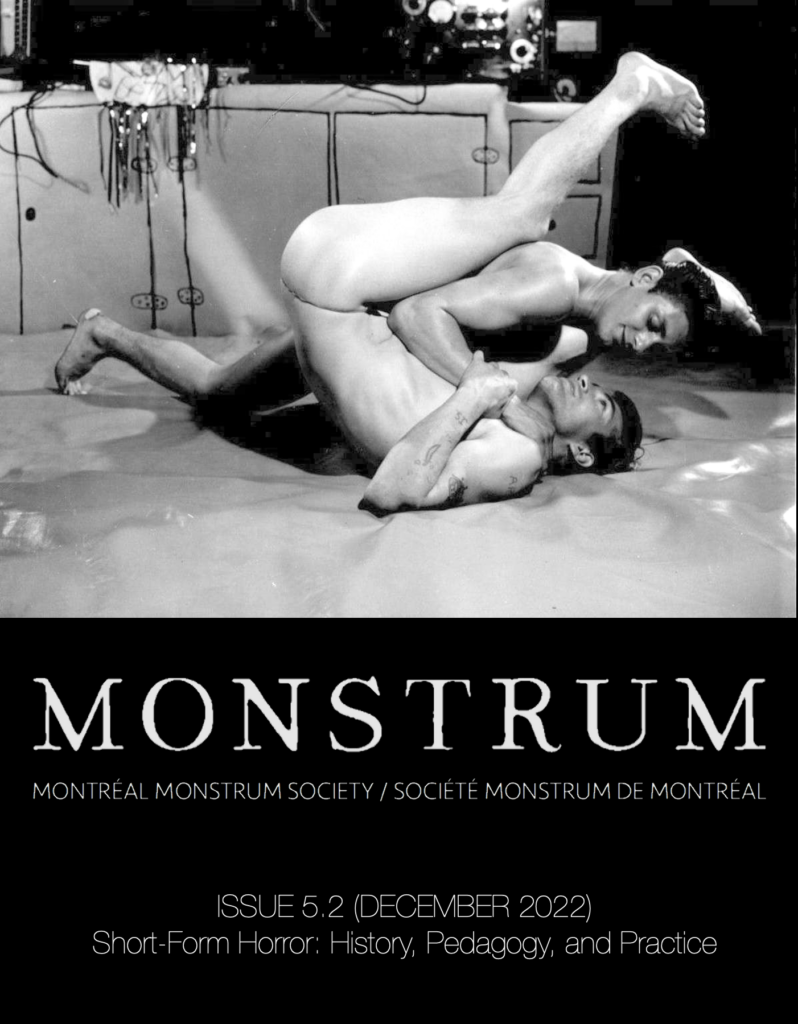
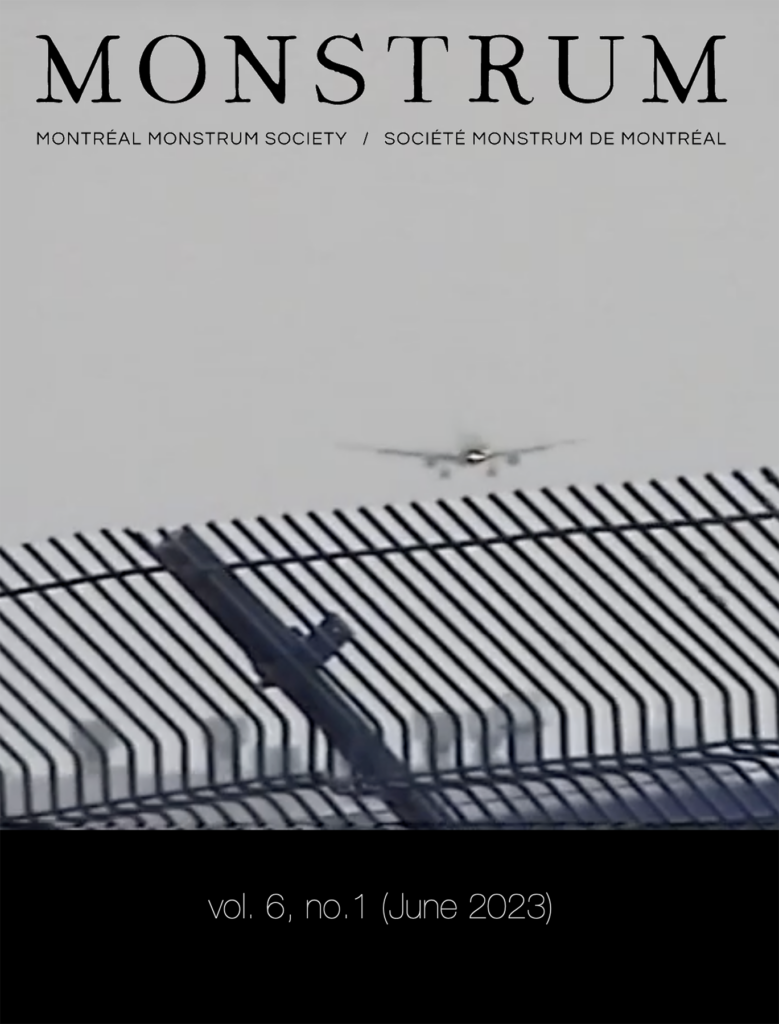
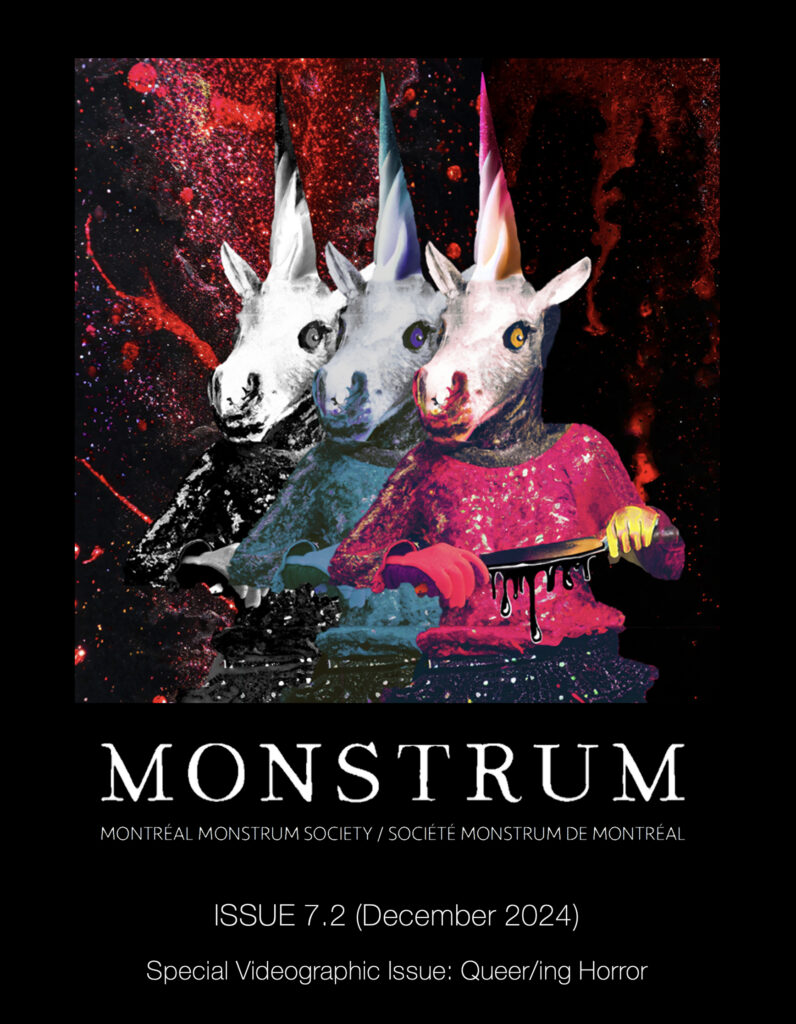
In addition to the issues featuring original videographic scholarship (December 2022, 5.2, and December 2024, 7.2), Monstrum published a special guest-edited dossier on “Russian, Belarusian, and Sakha Horror” (June 2023, 6.1) which included original translations of Russian horror scholarship.
We have published feature interviews with the creators of unique horror film festivals such as the “Africa International Film Festival” and “Blood in the Snow Film Festival” (December 2022, 5.2), as well as a feature interview with controversial Canadian filmmaker Bruce LaBruce (June 2024, 7.1).
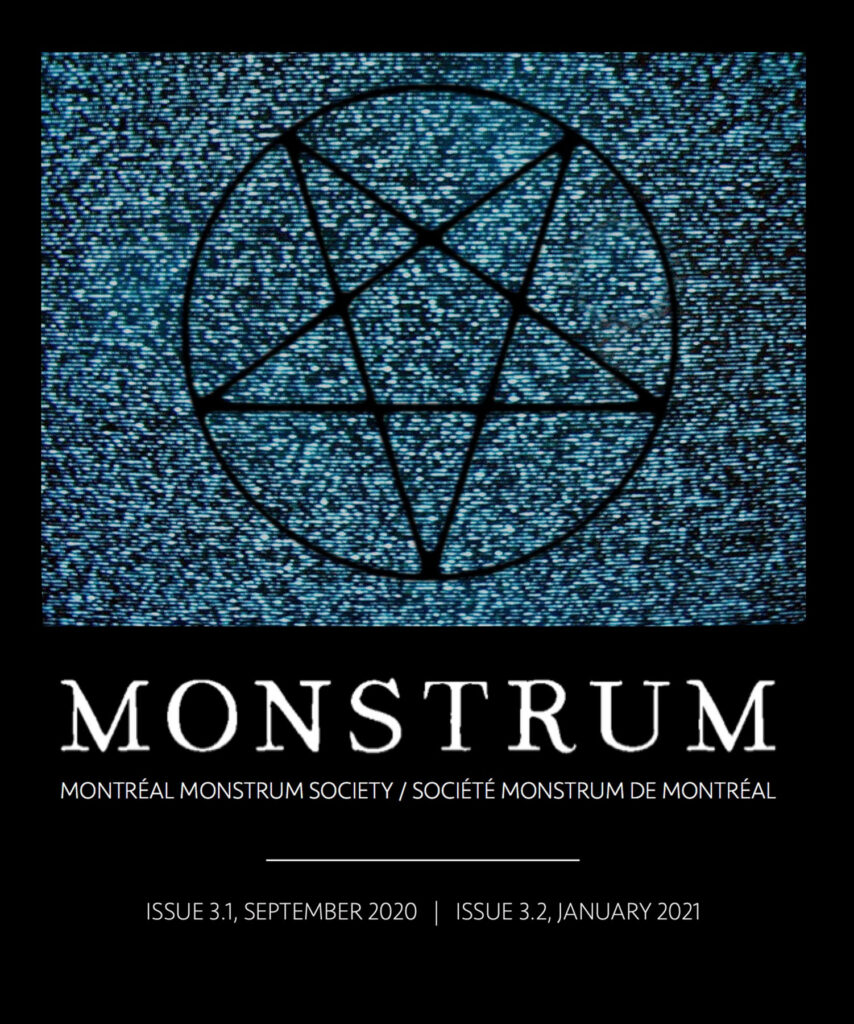
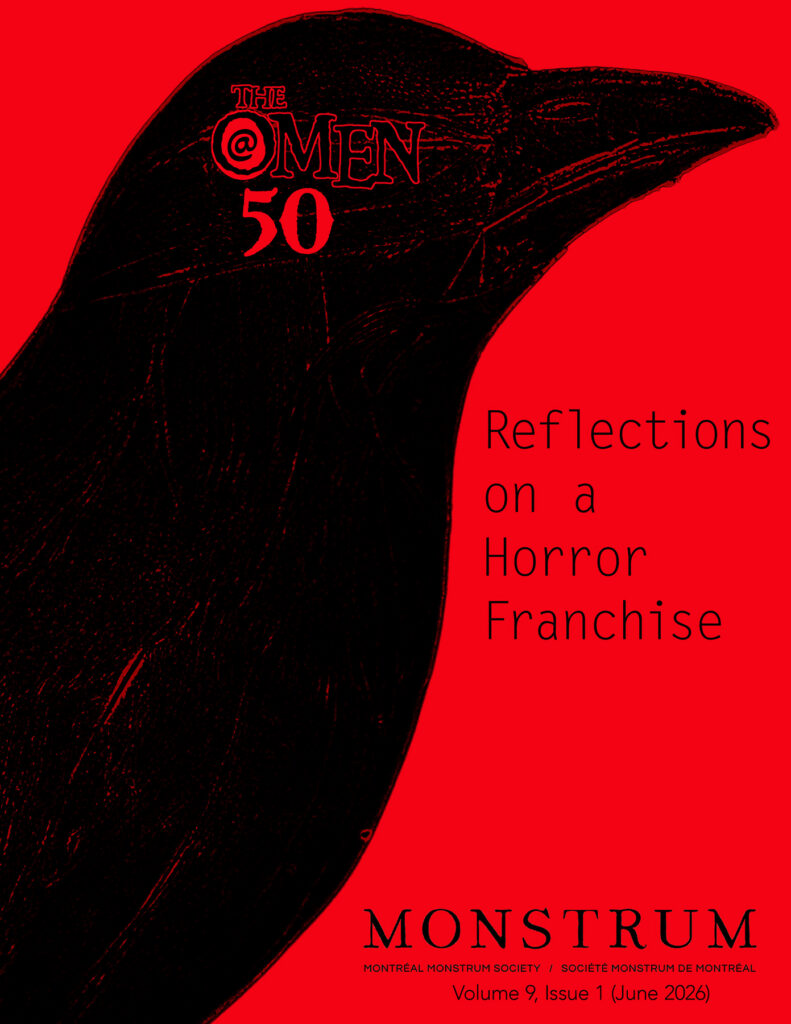
We would also point potential readers to the excellent guest-edited special issues on the legacy of the series Supernatural (September 2020 / January 2021, 3.1 / 3.2), a single issue that had to be split because the Covid-19 pandemic delayed production of the series’ final episodes; on “Vegan and Animal Liberation Horror” (December 2025, 8.2), which included original works of fiction; and our most recent special issue (June 2026, 9.1), a deep dive into the legacy of The Omen franchise, published fifty years to the day of the film’s release.
For our upcoming tenth year of publication, we are looking forward to some exciting topics as well, including a special guest-edited issue on “Youth Horror” across media.
Eager to learn more about scholarly publishing?
Read the other interviews of the ” 5 questions with…” series.