Check out our Annual Report for 2024-2025, which covers a year filled with great achievements and looks forward to a future full of promise.
For more than 25 years, supporting open and sustainable practices for the digital publishing and dissemination of scientific knowledge has been at the heart of Érudit’s mission. This year, this commitment has led to several concrete achievements made possible by cooperation, mutual trust and an unapologetically humanistic outlook.
Here are a few of these achievements.
Commitments to Open Science
As defined in the UNESCO Recommendation, open science covers a set of principles and practices aimed at making research more accessible and inclusive. While these apply to multiple areas, Érudit focuses its activities on three key pillars:
Diamond Open Access
This year has been a turning point for Érudit’s commitment to open access. The adhesion of 57 academic libraries led to the conclusion of a major five-year agreement with the Canadian Research Knowledge Network (CRKN) to renew the Partnership for Open Access (POA). In 2025, that represents more than 260 Canadian scholarly journals who benefit from financial support through this agreement.
As part of the strategic partnership Coalition Publica, Érudit and the Public Knowledge Project (PKP) have signed and released a Statement on Diamond Open Access. This statement invites the entire research ecosystem to give its support to this transformative model, with a reminder that a majority of Canadian journals already adhere to it.
Multilingualism and Bibliodiversity
Our commitment to multilingualism and bibliodiversity manifests as a continuous support for the publication and dissemination of research in several languages, with the goal of highlighting the richness and the diversity of knowledge.
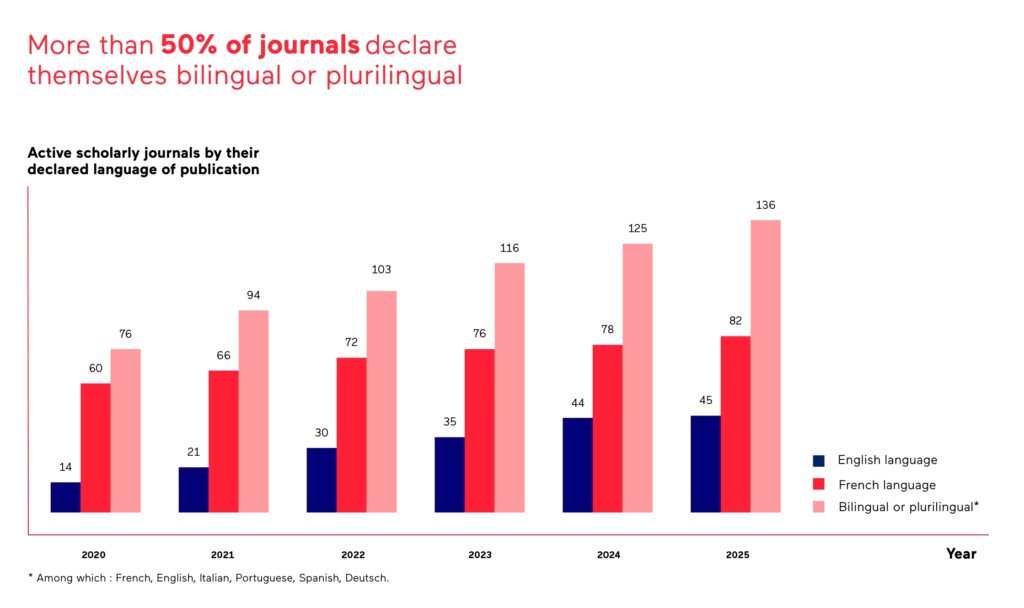
In 2024-2025, the number of multilingual journals disseminated on our platform kept growing. Currently, more than 50% of journals disseminated on our platform describe themselves as bilingual or multilingual. We are delighted to have reached this milestone, which supports the inclusion of our readers with diverse linguistic profiles.
Open Research Data
This year, we developed freely accessible resources and tools documenting the journal and research ecosystem, as openly as possible.
A key achievement of our research team, the Repository of Canadian scholarly journals provides an unprecedented list of every scholarly journal in Canada. This tool is naturally available in open access in the Boréalis national repository.
In order to reaffirm our opposition to commercial publishers’ control over the dissemination and evaluation of research, we have also signed the Barcelona Declaration on Open Research Information. This declaration aims to make research data (or metadata) more accessible, as it often remains locked away in proprietary and commercial platforms, thereby hindering the development of knowledge and the assessment of its social impact.
Our Year in Numbers
Evolution of the Corpus
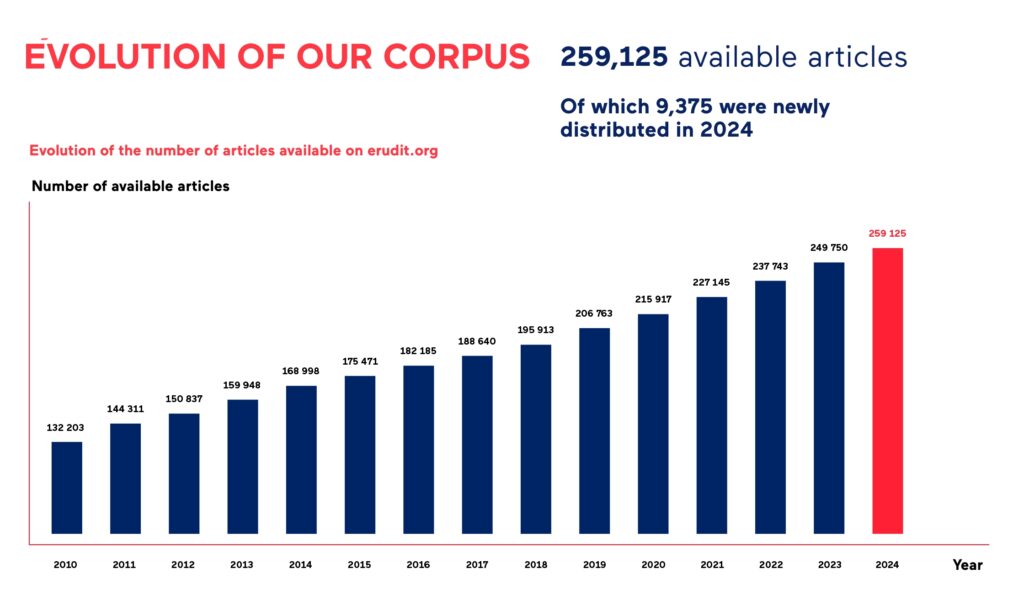
The number of articles available on our platform has reached 259,125 this year, with 9,375 added in 2024.
Over Half of the Journals in Open Access
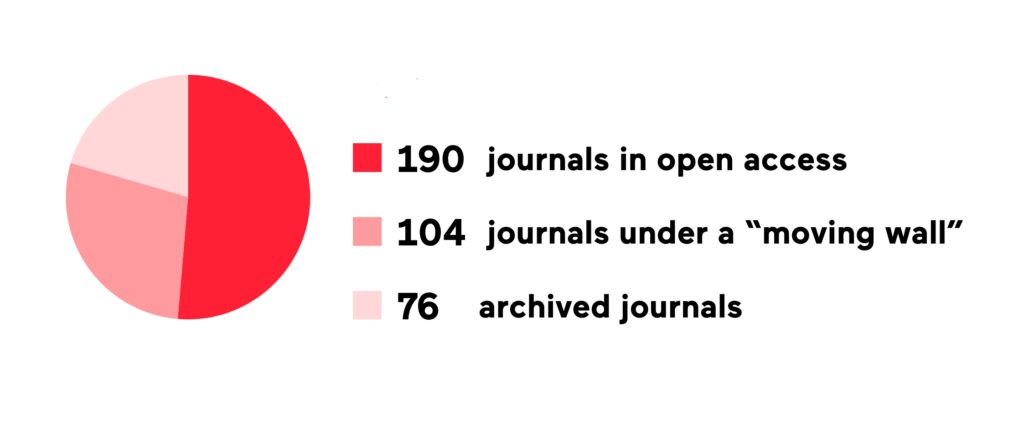
Among the 370 journals we are currently disseminating, 190 are available in immediate open access.
An International Readership
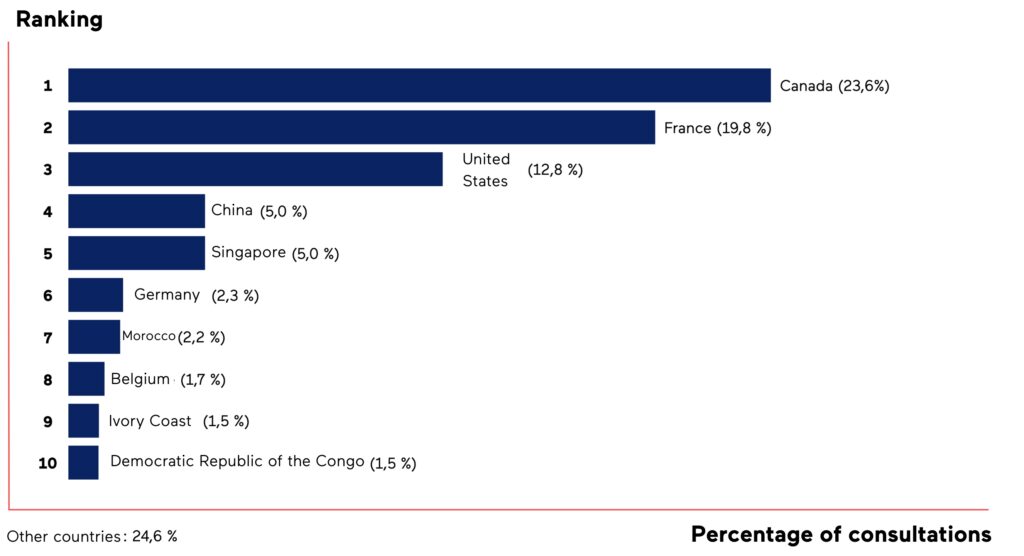
Érudit is a Canadian platform with an international reach! This year again, more than 75% of our readers were located outside Canada.
An Ever-Growing Linguistic Diversity
This year, more than 50% of the journals available on our platform claim to be bilingual or multilingual. You may therefore come across articles in Italian, Portuguese, or German when browsing our platform.