
In addition to our platform and the articles it disseminates, Érudit is a digital infrastructure whose wide range of services helps support open scholarly publishing in Canada. But what does that mean, specifically?
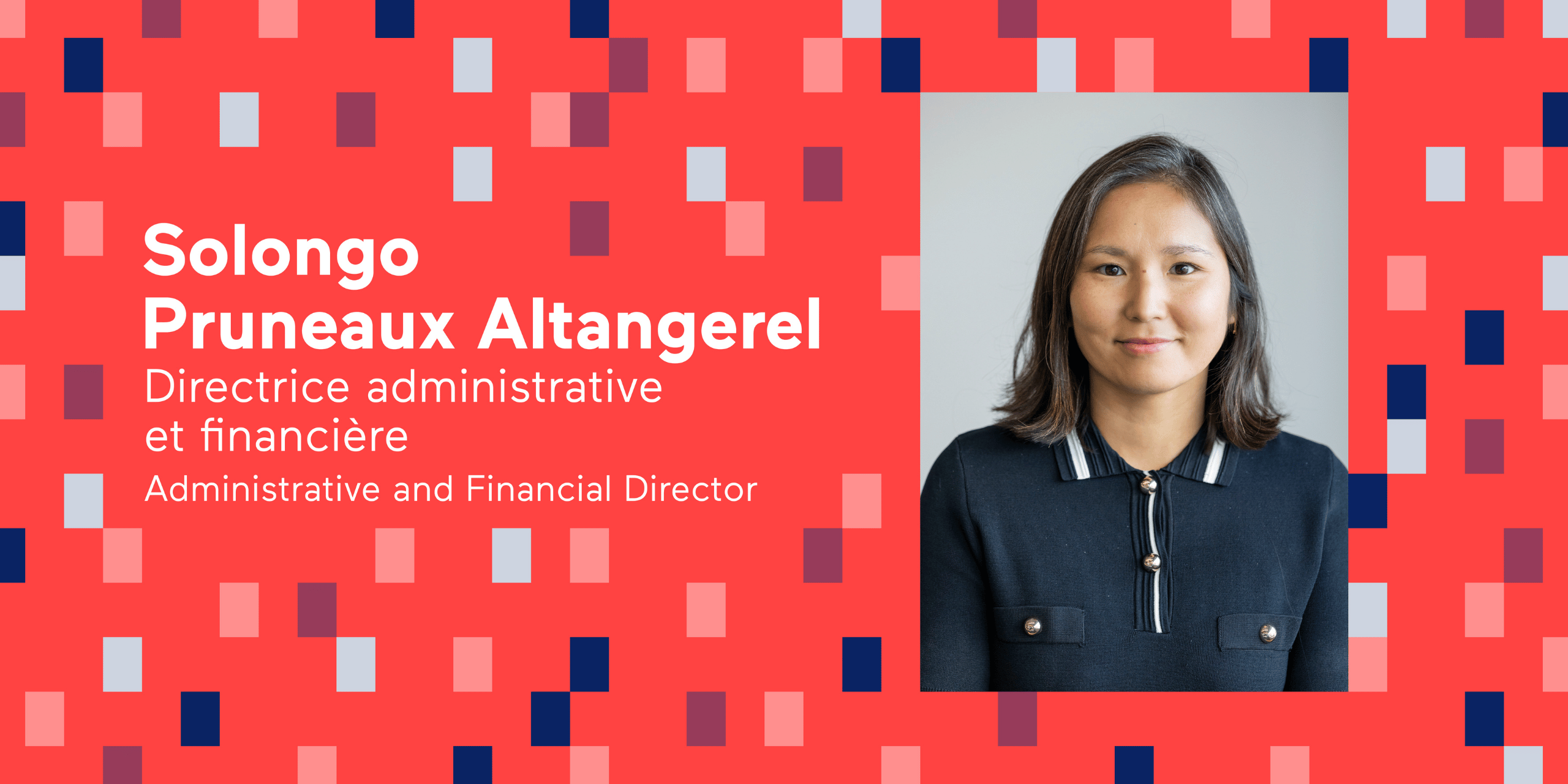
Our series “The Team Behind Érudit” continues! This series aims to introduce some of the members of our organization and the work they do on a daily basis. Today, we’re spotlighting Solongo Pruneaux Altangerel, our Administrative and Financial Director!
In a few words, how would you describe your role at Érudit?
At Érudit, I have multiple roles.
The main one, of course, is financial management of the organization: leading the team, ensuring that processes are followed and that continuous improvement efforts are maintained, particularly with regard to tools that strengthen internal controls and clarify the management of our finances. Érudit is primarily funded by public funds, so it is essential that our financial management is beyond reproach.
As a member of the Executive Committee, I also play a leading role in various organization-wide projects by taking a cross-functional and long-term vision, especially with regard to the financial sustainability of our activities. I am also part of our Equity, Diversity and Inclusion committee and serve as the liaison with Centre d’Innovation de l’Université de Montréal, where our offices are located. I love building relationships, so I am often happily involved in HR files and internal communications initiatives.
Could you describe a typical day at Érudit?
On a daily basis, my time is divided between emails, meetings with colleagues, working on various projects, and, above all, providing support to major organizational initiatives, such as managing the transition to open access for journals on the Érudit platform. The annual accounting calendar is already defined and its rhythm is known in advance, so the other files I work on that vary according to their priority levels.
Which project that you have contributed to recently makes you particularly proud?
The ongoing project to standardize and simplify invoicing, as well as stabilize payments to journals on fixed dates. This seemingly trivial project has mobilized considerable resources and required changes to processes and software, with the aim of improving internal control, streamlining recurring tasks, and offering a degree of predictability to journals.
What was your career path before joining Érudit?
After studying business administration, specializing in corporate finance at HEC Montréal, I worked in SME acquisitions, commercial financing, consultancy, and finally in a corporate role as a financial controller. The focal point in these roles has always been innovation in its many forms. In that respect, the recognition of the Partnership for open access (POA) model as a social innovation makes me particularly proud to work at Érudit.
Finally, would you like to tell us about an article available on our platform that is close to your heart?
I am currently taking classes in social innovation management at HEC Montréal. In connection with a specific course, I would recommend reading issue no. 765 of the Relations journal, entitled Cap sur la décroissance.