

In 2026, three journals on Érudit took a decisive step by adopting diamond open access, a dissemination model making content available free of charge as soon as it is published, with neither embargo nor financial barriers for readers. This decision marks a significant shift in publishing practices, at the heart of current transformations in scholarly communication.
Diamond open access offers numerous advantages: it promotes greater visibility for articles, ensures increased availability of knowledge, and aligns with the recent updated requirements of Canadian funding agencies. It also helps simplify certain editorial processes and broaden the impact of publications, both within research communities and in professional and societal contexts.
Adopting this model, however, represents a considerable challenge for editorial teams and marks a significant turning point in a journal’s development. This transition involves organizational, financial, and technical adjustments, reflecting a strong commitment to a more open dissemination of knowledge.
Journals that have chosen diamond open access are part of a global movement supported by numerous scientific and funding organizations, including the three federal research councils and the Fonds de recherche du Québec, playing a key role in fostering the emergence of a more open, inclusive, and equitable research environment.
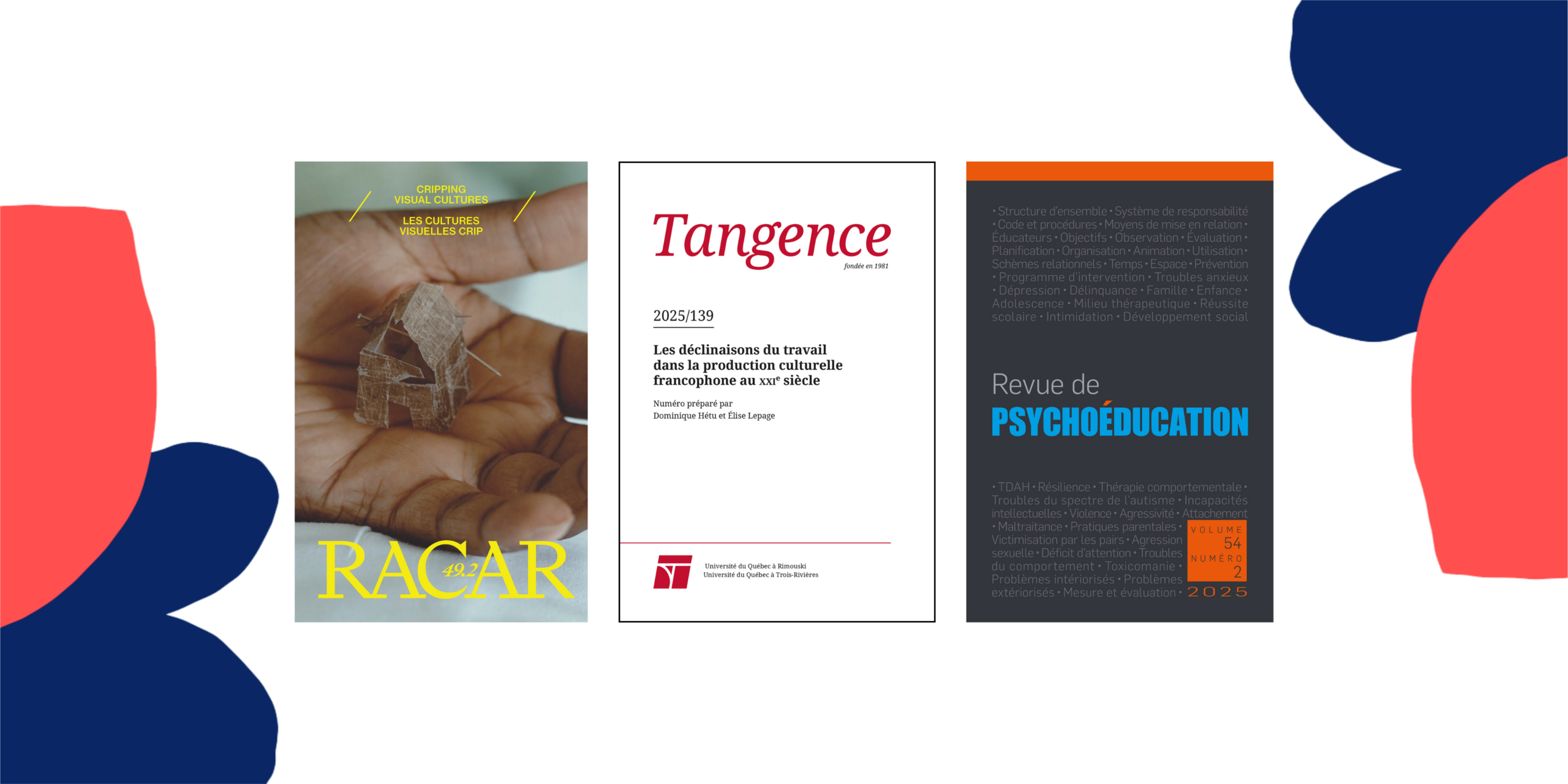
Discover the journals that have transitioned to open access
We would like to highlight these journals’ transition to open access in 2026, a significant milestone in their journeys. Having been part of the scholarly publishing landscape for an average of nearly 35 years, they demonstrate considerable disciplinary diversity, ranging from education to psychology, including literary studies and the arts. We invite you to explore their entire collection, now available in open access on the erudit.org platform:
RACAR: Canadian Art Review / Revue d’art canadienne
Founded in 1974, RACAR is published by the Universities Art Association of Canada (UAAC) and housed at the Université du Québec à Montréal. RACAR’s scope reflects the range and diversity of art history practices at the national and international levels. The articles published in RACAR cover all countries and all periods, as well as the history of design. In addition to publishing reviews of recent books and exhibitions, the journal offers a space for artists to present, reflect upon, and discuss their work, as well as a forum for current concerns, debates, and polemics in art history.
Tangence
Published by the Department of letters of Université du Québec à Rimouski (UQAR) and the Department of French studies of Université du Québec à Trois-Rivières (UQTR), Tangence is a journal that draws upon a rich intellectual tradition spanning more than three decades. As its name suggests, Tangence is concerned with the relationships between literature and the other arts, philosophy and the sciences, with a view to drawing together knowledge along common lines of reflection. Not affiliated with any one school, the journal seeks to serve as a point of convergence between too-often-dissociated fields of investigation by examining a wide variety of themes and issues.
Revue de psychoéducation
Founded in 1964, the Revue de psychoéducation promotes the publication of articles addressing the principal dimensions of psychosocial maladaptation issues : description, etiology, prevalence, prediction, diagnosis and prognostic, intervention and evaluation of the intervention. The articles may take the form of reviews, empirical studies, clinical experiences, case studies or theoretical work.
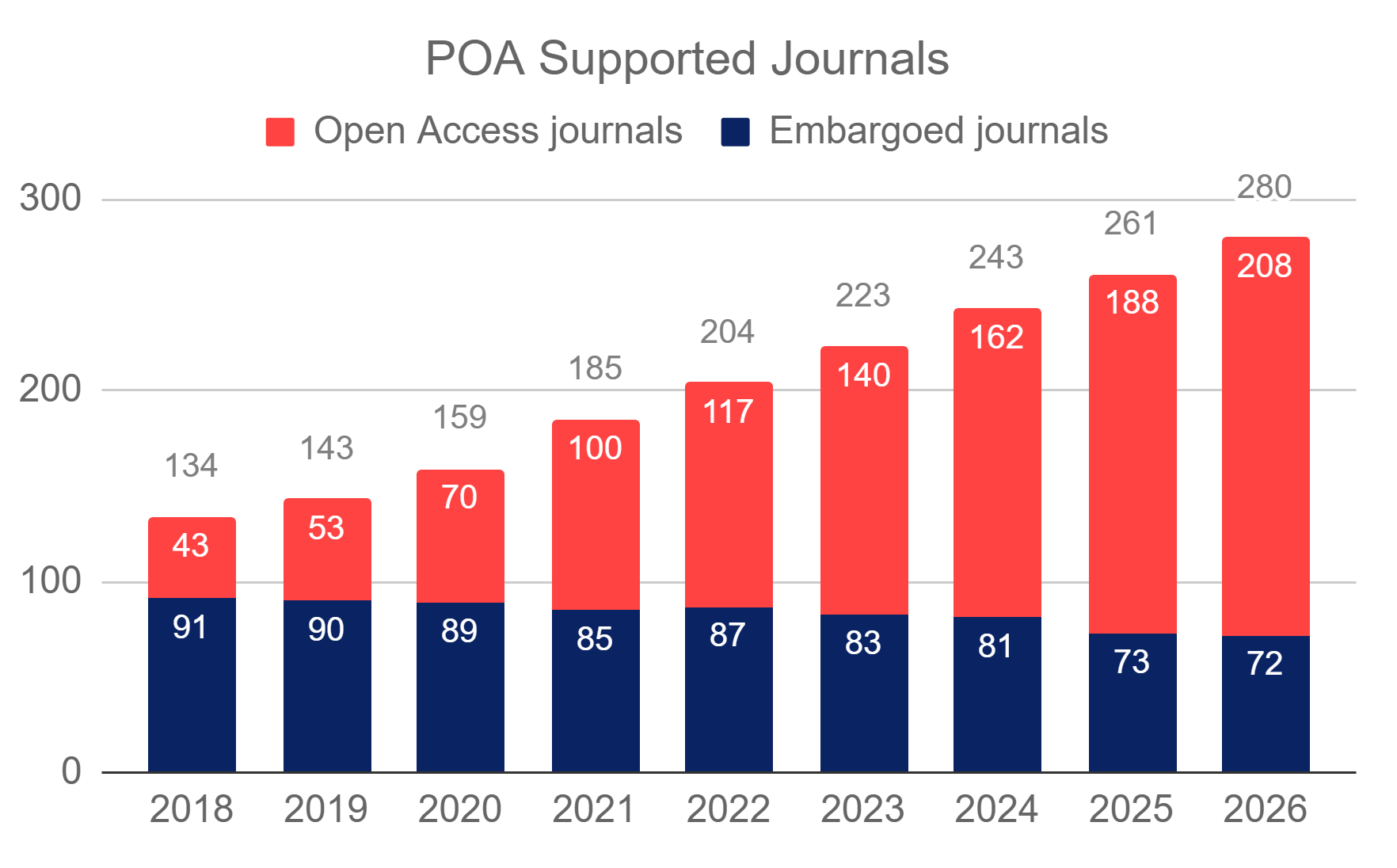
More Diamond Open Access Journals
Six journals also flipped to immediate open access in 2025. Discover these journals here.